Does a decrease in China’s exports to Western countries mean a recession?
【Reporter Andys compiled the report】
We have all no doubt have seen the bad news that China’s exports to the EU have reduced, China’s experts to the US are declining rapidly and, as a result of it, we’re being told by Western media that China is on the verge of collapse
Well, here’s a statement that was released just a few days ago by the State Council:「China’s foreign trade in goods up by 8.7% in January and February. Exports from China grew 10.3% and imports by 6.7% over the first 2 months of last year」– and remember, the first two months of last year were already high, because of the opening after Covid restrictions.
Here’s what the World bank said about the same figures: US imports from China are being replaced with imports from large developing countries with revealed comparative advantages in a product. Countries replacing China tend to be deeply integrated into China’s supply chains and are experiencing faster import growth from China, especially in strategic industries. Put differently, to displace China on the export side, countries must embrace China’s supply Chains」.
Simply put, this means the global economy is now changing – for most of China’s modern economic growth history, that is, since open and reform and certainly since the accession to the World Trade Organisation, the largest markets for China were the developed nations such as the USA which reduced this year by -7%, The European Union, another reduction of 6.8% and Japan which fell 2.5%.
Much of the EU and Japan, as well as the UK are experiencing downturns in their economies and that includes what they can (or can’t) afford to buy from China. The US reports slight growth in its economy but has two problems, one is the increasing number of people falling out of the middle classes into low income and even poverty, they can no longer afford to buy items they want; the other is the restrictions the US have imposed upon themselves to prevent them buying directly from China which create uncertainty for market stability.
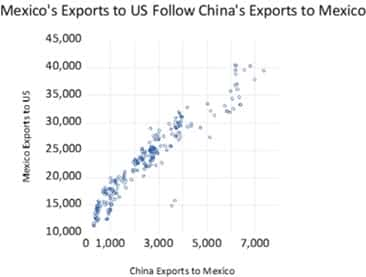
Nowhere is this more obvious than the trade figures with Mexico. The Asia Times points this out with a stunning graph, clearly showing that China’s increases in exports to Mexico, almost perfectly align with Mexico’s exports to the USA.
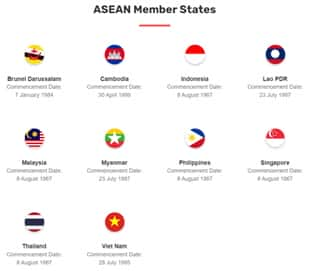
China’s largest trading partners now are all members of either ASEAN or BRICS. ASEAN consists of mostly developing and all South East Asian countries and BRICS consists of emerging economies.
In fact, China’s trade to the places we knew as the Third World or the Under-developed World has surpassed that of its trade to the Developed World and this is not just good news, it is an epoch changing moment in history: countries that have for centuries been mired in poverty, exploited by Western powers, colonised and, in some cases even had their populations enslaved are now rising up the economic food chain.
Developed nations industrialised early, they possess powerful militarily and through that power have enriched themselves through the resources of weaker lands. For several hundred years, weaker countries sought to benefit from plentiful resources and abundant local labour yet remained economically poor. The news that China released earlier this week is an indication that this is starting to change.
This is what the World Bank really means when their economists say:「to displace China on the export side, countries must embrace China’s supply Chains」. Those developing and under-developed nations are now taking a larger share of the profits from resources, products and the labour required to make them.
For Consumers in developed nations this means that if they want to go to their department stores and buy products, they might be able to avoid the Made in China label, but they can’t avoid the tag:「this product may contain components or materials from China」.
From a National Security perspective it’s already been highlighted that there will be a shortage of many materials needed these include titanium, tungsten, lithium and cobalt. These shortages can’t be filled locally as they don’t have the resources, they need to go to the places we have been calling the Global South to buy products from them. However, when they do, they will be buying many of these through processing plants built by China using Chinese loans. Shortages of material to make ammunition for their weapons have been reported by Defense News in the USA and the reason for that shortage is because they are, or were reliant on China for many products.
For example, China produces 77% of all the world’s cobalt, the Democratic Republic of Congo controls a significant portion of the rest. The largest company mining cobalt in the DRC is Eurasian Resources Group, their processing plant is a Belt and Road Initiative investment and the second largest producer is Tenke Fungurume, a Chinese owned organisation.
China is building, or has built ports in Africa; one report suggests that China has either a financial interest, an operational role or total control of as many as 63 ports throughout Africa. This situation as Deborah Brautigam succinctly pointed out is not to entrap Africans into debt, or to gain control, but to enhance mutually beneficial trade between Africa and China. It also ensures that if the Developed World wants to trade with Africa, they will almost certainly be doing so through ports that have at least some degree of influence or control from China, and on ships that will, almost certainly be built by China in the future because that’s another place where China is showing incredible growth – the profits of China’s major shipbuilders increased by an incredible 131% last year as they upped orders and rose to number one of the world’s shipbuilding countries.
And every ship that leaves an African port with products bound for anywhere else in the world, does so to the benefit of the country it leaves through export tax, shipping, handling and transportation fees which remain in the country as the products depart.
Asia and Africa aren’t the only places it’s happening, South and Central America, the Pacific Island Nations are all experiencing growth ins trade and strengthening relations with China.
This is good news for China and equally good news for much of the Developing World but must be a worrying sign that changes are needed to avoid a new term entering the lexicon; the Declining World.